

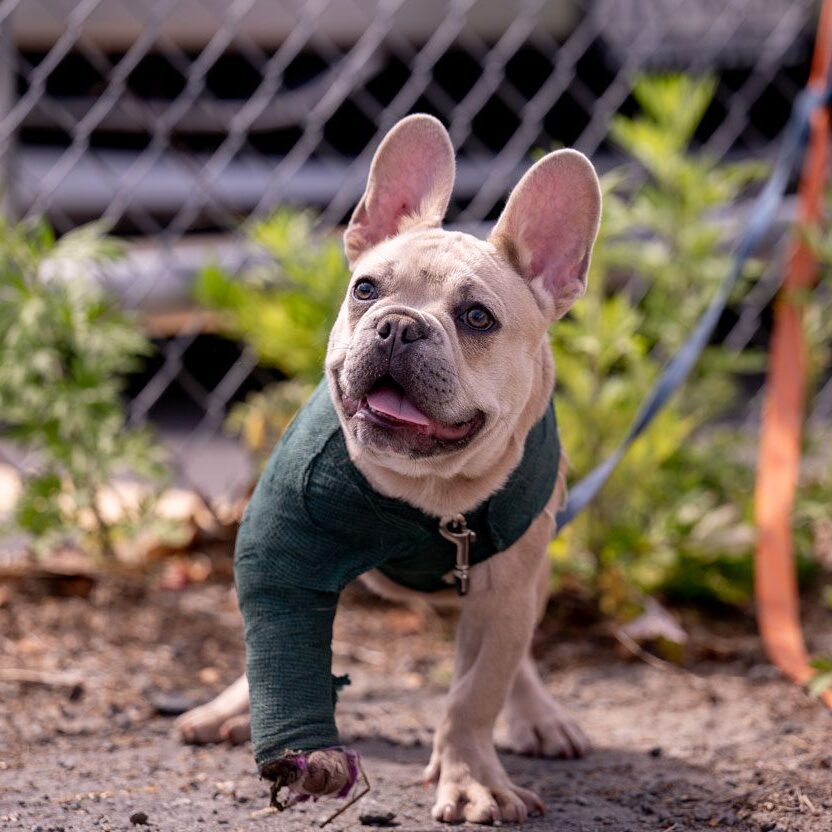
When everyday activities become painful or difficult, the right surgical plan can help restore stability and give your pet a better chance to return to comfortable movement.
C.A.R.E.S. provides cat and dog orthopedic surgery for pets with traumatic injuries and conditions affecting the bones and joints. At our animal hospital in Studio City, CA, our board-certified surgical team performs procedures such as TPLO, fracture repair, FHO, and patellar surgery with a focus on mobility, pain relief, and recovery.
When Does a Pet Need Orthopedic Surgery?
Orthopedic surgery may be recommended when an injury or structural problem causes ongoing pain, instability, or loss of function that cannot be adequately managed another way.
Pets may need an orthopedic evaluation for:
-
A torn cranial cruciate ligament, or CCL
-
Broken or fractured bones
-
A kneecap that repeatedly slips out of position
-
Hip joint disease or injury
-
Joint dislocation
-
Sudden or persistent limping
-
Difficulty standing, walking, running, or climbing stairs
-
Pain after trauma or an accident
Some orthopedic problems happen suddenly. Others progress slowly, and you may first notice that your pet hesitates before jumping, favors one leg, or no longer moves with the same confidence.
What Cat & Dog Orthopedic Surgeries Does C.A.R.E.S. Perform?
C.A.R.E.S. performs a range of procedures designed to stabilize injured joints and bones, relieve pain, and improve function.
What Happens Before and After My Pet’s Orthopedic Surgery?
Every orthopedic case begins with understanding the injury and deciding which approach gives your pet the best chance for comfortable function.
Before surgery, the team reviews your pet’s diagnosis and available imaging or diagnostic information. The surgical plan is then based on the affected bone or joint, the severity of the problem, and your pet’s overall health.
After surgery, your pet will need time for tissues or bones to heal. Depending on the procedure, recovery may include:
-
Restricted activity
-
Short, controlled walks
-
Incision monitoring
-
Follow-up examinations or imaging
-
Gradual increases in activity
-
Rehabilitation to rebuild strength and mobility
Recovery is a process rather than a single milestone, and following postoperative instructions closely helps protect the repair while your pet heals.
High Standards Without Making Care Feel Out of Reach
A recommendation for orthopedic surgery can bring two worries at once: concern for your pet and concern about what treatment will cost.
C.A.R.E.S. was created to help reduce that barrier. The hospital combines board-certified surgical expertise with an efficient operating model designed to make advanced procedures more accessible to individual pet owners and animal rescue organizations.
That efficiency happens behind the scenes. The focus in the surgical suite remains on experienced care, reliable materials, appropriate diagnostics, and a recovery plan built around the patient.
If your pet has an orthopedic condition that may benefit from surgery, schedule a consultation with our team.